

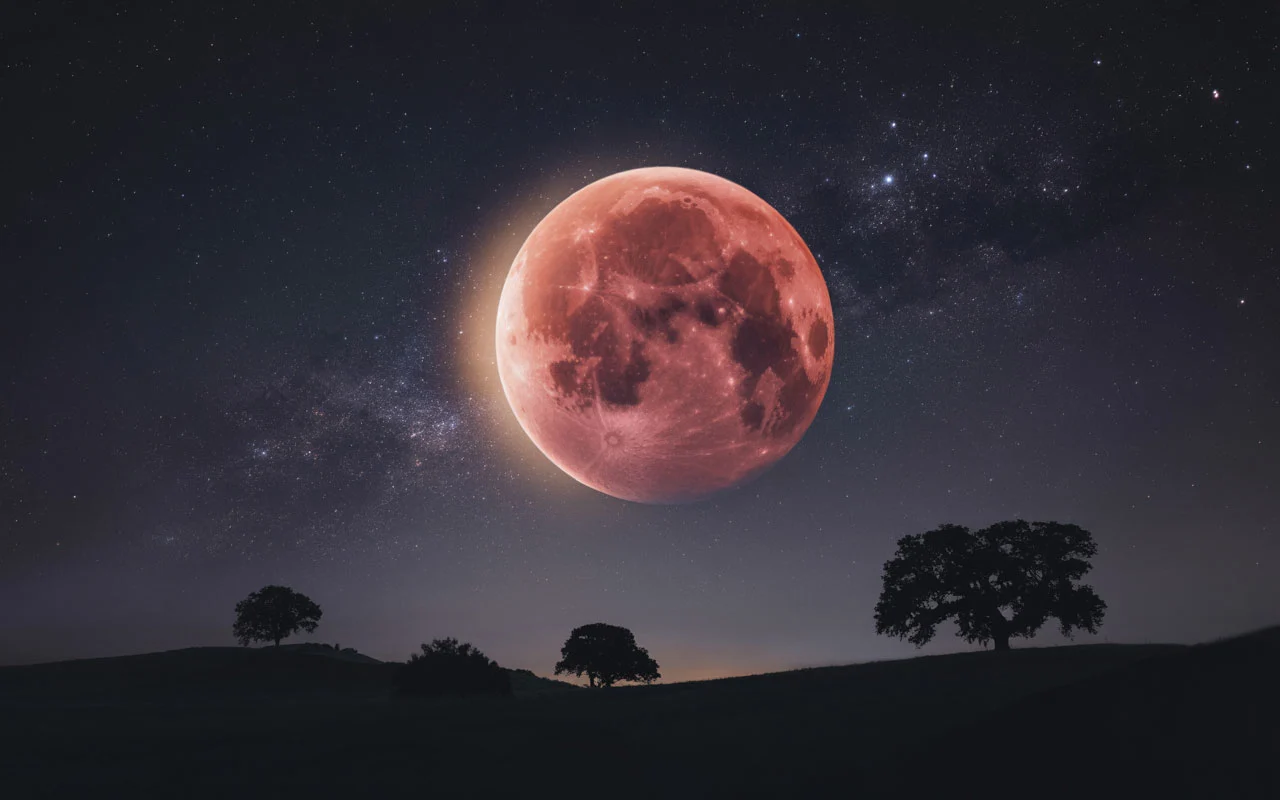
Have you ever looked up at the night sky and noticed the Moon glowing a strange reddish hue? If so, you’ve witnessed one of nature’s most mesmerizing phenomena—a “blood moon.” But what exactly happens when the Moon turns red, and should you be worried?
As an amateur astronomer who has spent countless nights observing lunar events, I’m often asked this question. Today, let me walk you through the science, the myths, and what you can actually expect if the Moon turns red.
Why Does the Moon Turn Red?
When we talk about the Moon turning red, we’re usually referring to a total lunar eclipse. During this event, Earth moves directly between the Sun and the Moon. Earth’s atmosphere bends sunlight and filters out shorter wavelengths like blue and green, allowing only the longer red wavelengths to reach the Moon. This is the same reason sunsets look orange or red.
A total lunar eclipse doesn’t happen every month—it occurs about twice a year on average, and only when the geometry is just right. The result? The Moon appears red or copper-colored for a period ranging from a few minutes to a few hours.
Is a Red Moon Dangerous?
The short answer: No, absolutely not.
A red or blood moon is a purely natural event. There’s no increase in harmful radiation or sudden cosmic disruptions during a lunar eclipse. Contrary to popular myths that suggest apocalyptic events, the Moon turning red is simply a celestial spectacle.
In my experience attending over a dozen lunar eclipses, the most dramatic thing you’ll face is a crowd of excited skywatchers—and maybe a few cold fingers if it’s a chilly night!
How Can You Best Experience a Blood Moon?
Having watched lunar eclipses in various parts of the world, I can confidently say that planning ahead makes all the difference. Here are some practical tips I’ve learned over the years:
1. Know the Schedule
Use trustworthy sources like NASA’s eclipse calendar to find out when the next lunar eclipse will occur. These events are predictable years in advance.
2. Pick the Right Location
Aim for a location with minimal light pollution and a clear, unobstructed view of the horizon. Parks or rural areas usually work best.
3. Bring the Right Gear
While the red hue is visible to the naked eye, using binoculars or a telescope enhances the experience. Don’t forget to pack warm clothes, snacks, and maybe a comfy chair.
4. Document the Event
Taking photos of a blood moon can be tricky without the right camera settings. Set your camera to a long exposure, and experiment with ISO and shutter speed to capture the rich reds.
Scientific Insights You Should Trust
According to studies from reputable institutions such as the European Southern Observatory, the exact shade of red during an eclipse depends on factors like Earth’s atmospheric conditions. Volcanic eruptions, pollution, and dust can all intensify the redness by filtering more blue light.
Moreover, organizations like NASA emphasize that lunar eclipses pose no threat and are safe to observe without protective eyewear—unlike solar eclipses.
Don’t Miss the Next Blood Moon
Seeing the Moon turn red is one of the most awe-inspiring natural events you can witness. It’s a reminder of the beautiful and predictable mechanics of our solar system. Next time a lunar eclipse is forecast, mark your calendar, grab your binoculars, and join the community of sky enthusiasts.
Curious to learn when the next red Moon will grace your night sky? Head over to NASA’s official eclipse schedule and start planning your stargazing adventure today.
Share your blood moon photos or experiences in the comments below. Let’s celebrate the wonder of our universe together!